A leaning post, detached panels or a damaged gate: after a storm, put safety first and have the complete structure assessed. Replacing a panel will not fix a failed anchor. This guide concerns insurance and reporting procedures in Belgium.
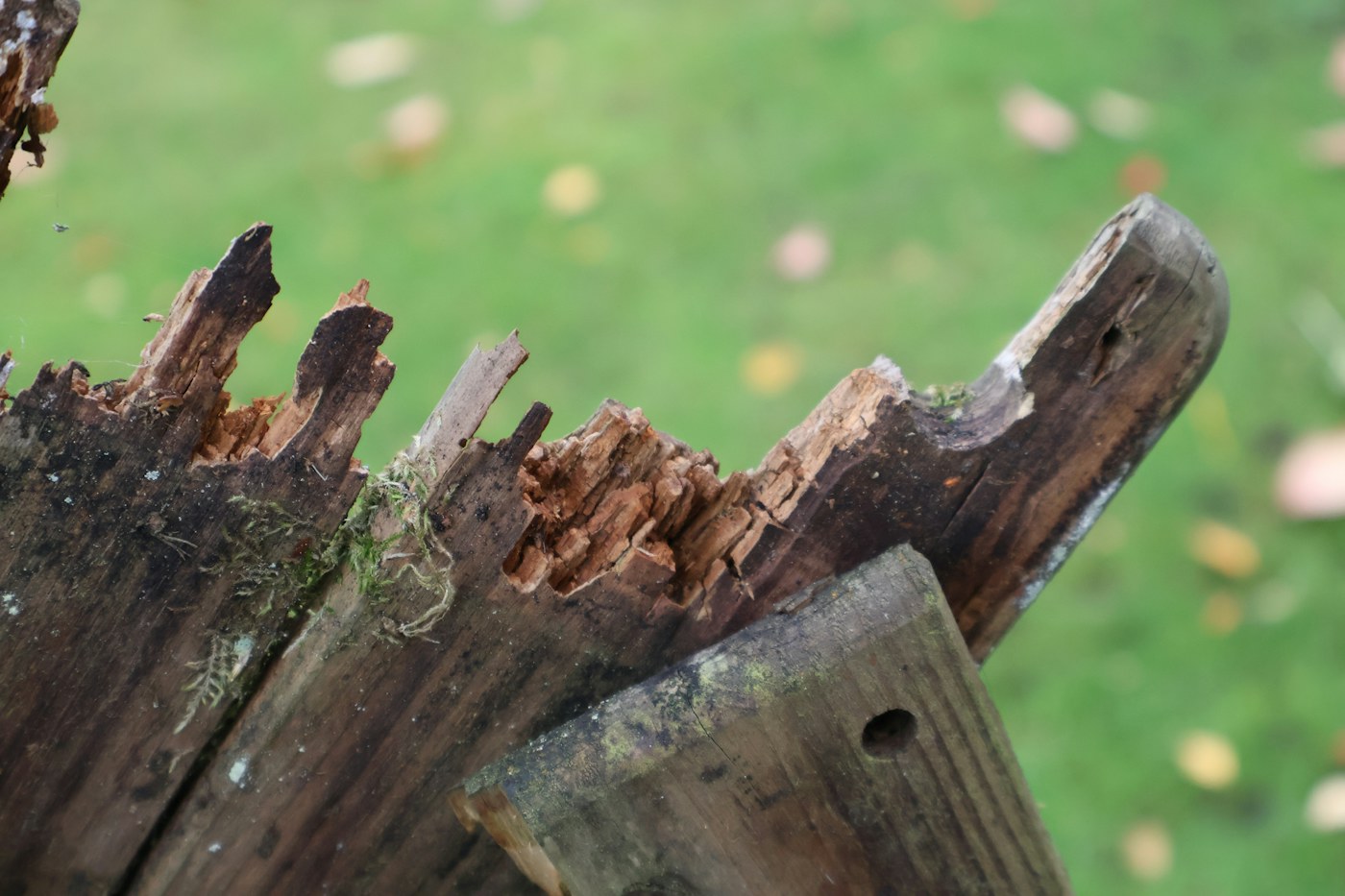
Illustrative stock photo of a damaged wooden fence. Photo: T / Unsplash. Unsplash
Wait until the storm has passed before inspecting damage. Keep children and pets away from loose panels and leaning posts. Do not try to straighten an unstable fence alone or touch fallen electrical cables.
Call 112 if someone’s life is in danger. For non-emergency fire service assistance in Belgium, use 1722.be, or call 1722 when the telephone line is activated. Ordinary repairs that do not require the fire service should be handled by a tradesperson.
2. Record the damage before clearing up
When safe, take wide shots and close-ups of the panels, posts, fixings and ground. Note the date, approximate time and circumstances. Keep purchase records and invoices for necessary emergency measures.
Notify your insurer promptly and ask what documents are needed. Agree non-urgent permanent repairs before commissioning them. Whether a fence is covered depends on your policy and the circumstances.
What wind speed counts for insurance?
Many Belgian home insurance policies use a wind speed of at least 80 km/h, recorded at the nearest Royal Meteorological Institute station, as a storm criterion. Ethias explicitly states this threshold. Check your own policy: some contracts also allow evidence of damage to other wind-resistant property or buildings nearby, subject to their terms.
80 km/h does not automatically mean a fence will be reimbursed in full. Ask your insurer to confirm fence cover, exclusions, payment limits, any excess and depreciation. Report the damage even if you do not know the local wind speed; your broker or insurer can explain the evidence required.
How to make a claim
Contact your own broker or insurer promptly by telephone, email or customer portal, following their procedure. Give the policy number, damage address, date and likely time.
Describe what happened and provide photos, an inventory of damaged parts and available purchase records.
Obtain an itemised repair or replacement quotation covering materials, labour, removal, disposal and any foundation work.
Keep damaged parts where safe until the insurer confirms they can be discarded; an assessor may need them.
Ask whether an inspection is required, when work may begin and which costs are accepted. Keep the claim reference and written agreements.
Take safe, necessary steps to prevent further damage and record them. Opening a claim or obtaining a quote is not a promise of payment. Bruno Denijs’s claims page provides an example of the documents requested; follow your own insurer’s procedure.
3. Check the whole structure
Have a professional assess leaning or moving posts, loose connections, distorted frames, cracks around foundations or base plates, and wall fixings. A gate that has shifted also needs its hinges, latch and supporting posts checked. Adjacent panels may be affected even when damage is not obvious.
Repair or replace?
A local repair may be enough if the supporting structure is sound. Damage to several posts, frames or foundations calls for a wider assessment. Establish which parts can safely be reused and compare quotes that include dismantling, disposal, foundations and installation.
Choosing a new garden fence
Wind resistance depends on the entire system: panel, frame, posts, connections and foundations. Height, soil and exposure also matter. An open site needs a different assessment from a sheltered garden. Greater privacy does not automatically mean greater wind resistance: a closed screen catches wind. No fence withstands every storm.
Forest Avenue is happy to discuss your situation
Our Woodscape panels with steel frames and Ecowood panels with synthetic frames are chosen for privacy, appearance and site conditions. Material choice alone cannot guarantee protection from storm damage.
Send photos, dimensions, your location and any questions from your insurer. We can look with you at what is damaged, what information is missing and what may be needed to put a file together. We can also discuss whether a replacement proposal would help. Your insurer decides on cover and compensation.